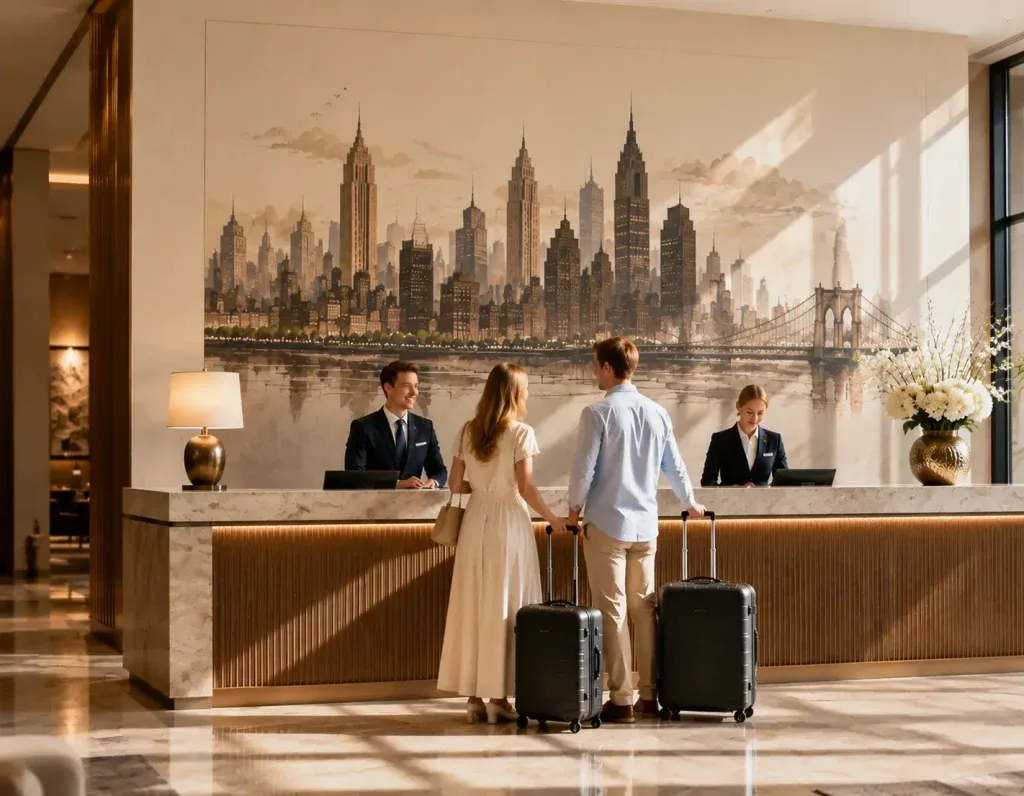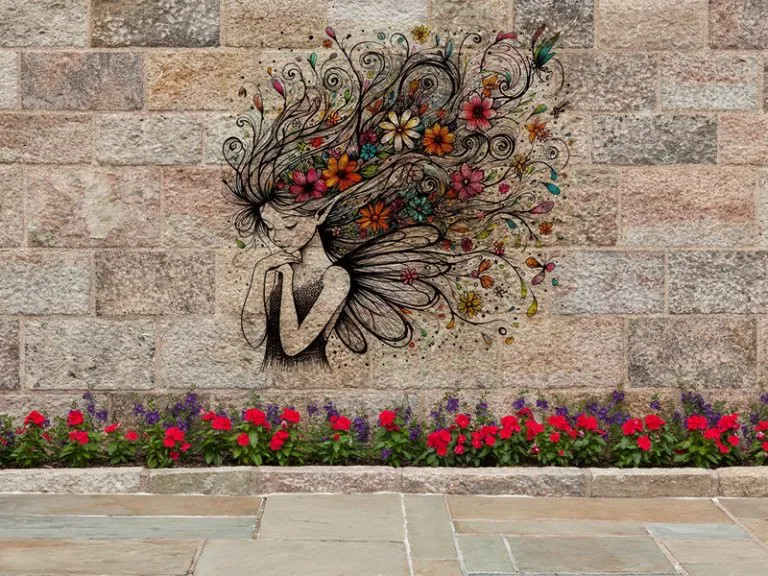

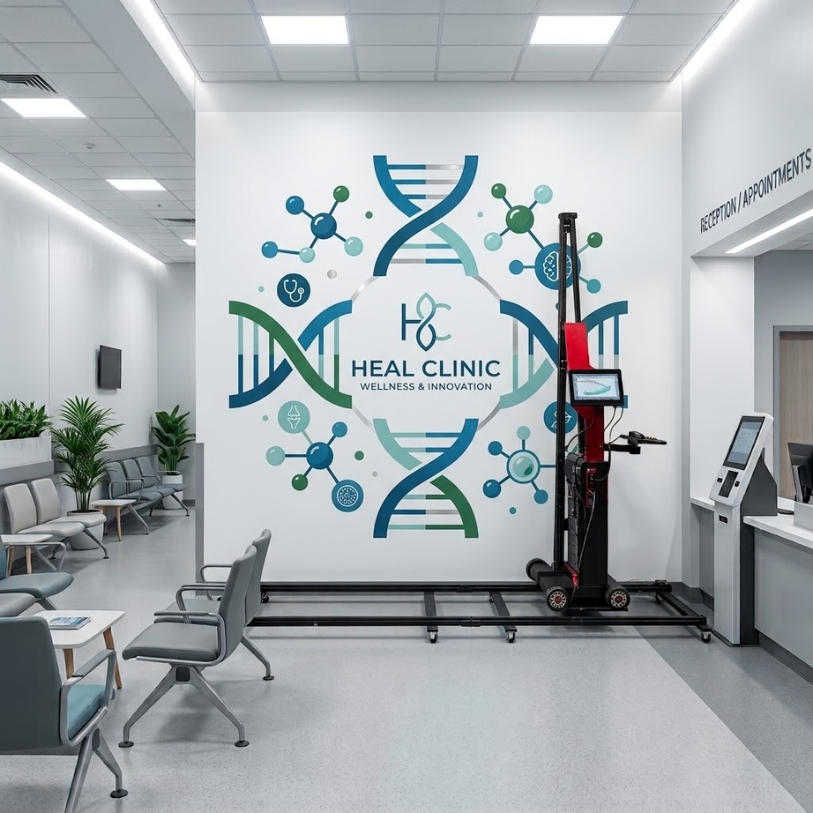
The visual environment of a medical or dental practice can influence how a space feels from the moment a patient arrives.
Reception areas, waiting rooms, corridors and treatment spaces do not have to rely entirely on plain painted walls or conventional signage. Direct surface printing allows suitable surfaces to become part of the interior design itself.
Creating More Considered Healthcare Interiors
Clinical environments need to remain professional and practical, but that does not mean they need to feel visually impersonal.
Direct-to-surface UV printing can be used to introduce carefully selected graphics directly onto suitable walls and other surfaces.
Applications might include:
- Reception feature walls
- Waiting-room graphics
- Children’s treatment areas
- Calm nature-inspired artwork
- Directional graphics
- Practice branding
- Corridor features
- Treatment-room imagery
- Glass or panel graphics
The objective does not necessarily need to be bold branding. In healthcare environments, subtle graphics can often be equally effective.
Printed Directly Onto the Surface
The key difference between direct surface printing and many conventional graphic methods is the way the design is applied.
The artwork is printed directly onto the suitable surface itself rather than being printed elsewhere and installed as wallpaper, vinyl, stickers or a separate decorative panel.
This makes the underlying wall, panel, glass or other approved material part of the finished visual.
Branding Without Making the Space Feel Corporate
Dental practices, private clinics and specialist healthcare environments often need to communicate a professional identity without making patients feel as though they are entering a conventional corporate office.
Graphics can be designed around the character of the practice.
For example, a dental reception might use restrained branded artwork, while a paediatric environment could introduce brighter illustrations and more playful visual elements.
The design approach can therefore be adapted to the people using the space.
Assessing the Surface and Working Area
Not every surface or room will be suitable without assessment.
Important considerations include:
- Surface material
- Surface condition
- Available print dimensions
- Equipment access
- Furniture and obstacles
- Floor condition
- Required working space
The printing system needs to operate from a flat, level and stable surface, so this is an important part of project planning.
Initial suitability can often be reviewed using project information, measurements and photographs. Where conditions are unusual or uncertain, further technical assessment may be required.
Previewing Healthcare Graphics
Where useful, SurfacePrint Solutions can also develop AI-assisted visual concepts using photographs of the proposed area.
This can help practices explore positioning, scale and overall design direction before artwork progresses further.
The visualisation should be treated as an indicative planning aid rather than an exact representation of the finished print.
A Different Approach to Healthcare Graphics
Direct surface printing gives medical and dental practices an additional way to personalise their environment.
Whether the requirement is a reception statement, calming waiting-room artwork or coordinated graphics across several areas, the project can be planned around the space, surface and intended experience.
SurfacePrint Solutions provides specialist direct-to-surface UV printing for commercial environments across South England, South West England and Southern Wales, subject to project and surface suitability.